Optimal Desk Placement Tips for a Productive Home Office

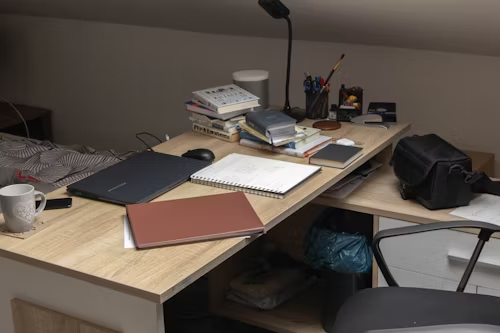
Setting up a home office can be an exciting step in your professional journey. However, one of the most critical decisions in creating a productive, comfortable, and inspiring workspace is home office desk placement.
Whether you’re working remotely full-time or simply need a dedicated spot for focused tasks, the placement of your desk can significantly impact your comfort, workflow, and overall success.
In this post, we’ll explore practical and effective desk placement tips to help you optimize your home office experience for maximum productivity and focus.
7 Essential Tips for Ideal Desk Placement in a Home Office
Below are seven essential tips for ideal desk placement in a home office to guide you as a remote worker to unlock the maximum experience of a home office.
1. Leverage Natural Light
One of the most powerful yet overlooked elements in your workspace is lighting. Whenever possible, position your desk near a window to take advantage of natural sunlight. Natural light boosts mood, energy levels, and focus.
However, be strategic—avoid placing your desk directly in front of or behind the window to reduce screen glare. Ideally, let light enter from the side, and use blinds or curtains to control brightness throughout the day.
2. Avoid Facing a Wall
Facing a blank wall can feel confining and limit your creative thinking. Instead, position your desk so you have a view of the room, or even better, a window.
An open view creates a sense of space, encourages creativity, and can make your work environment feel less isolating.
If your desk placement in your home office does not face a wall or keep you in a confined space, then congratulations—you’re slowly acquiring the professional home office setup you desired.
3. Prioritize Ergonomics
Comfort is key and plays a vital role in how productive a remote worker can be, so make sure your desk placement incorporates this trait.
Ensure your desk height allows your feet to rest flat on the floor, with your elbows at a 90-degree angle while typing.
Pair your desk with a supportive chair that encourages good posture and minimizes strain on your back, neck, and wrists. Click this link for ergonomics office furniture.
4. Allow Space for Movement
Speaking from experience, if the desk placement in your home office does not allow enough space for movement, it’s only a matter of time before you start feeling overwhelmed.
Your home office should enable freedom of movement. Leave enough space around your desk to stretch, reach for files, or move between tasks without obstruction.
Avoid overcrowding your workspace with unnecessary furniture, and aim for a clean, efficient layout that supports your workflow.
5. Minimize Distractions
Choose a location that’s quiet and free from frequent foot traffic. Distractions—whether visual, auditory, or digital—can break focus and reduce productivity.
Opt for a spot away from noisy areas like kitchens or entrances. If possible, use noise-canceling panels, noise-canceling headphones, or a door to create a more private workspace.
6. Work With Your Room Layout
If space allows, try placing your desk centrally in the room. This kind of desk placement in your home office can create a balanced and commanding presence.
For smaller rooms, placing the desk against a wall or in a corner works well—just maintain a sense of openness by avoiding clutter and keeping your surroundings clean and organized.
7. Try the Feng Shui “Command Position”
According to feng shui principles, placing your desk so that you can see the door (without sitting directly in line with it) invites a feeling of security and control.
This “command position” is believed to promote positive energy, confidence, and focus.
While this method of desk placement in a home office is optional, many professionals find it improves their mindset and productivity.
Why Proper Desk Placement Matters in a Home Office
Desk placement in a home office is about more than just aesthetics—it directly impacts how well you work. Here’s why it deserves serious consideration:
- Natural Light improves mood and energy
- Ergonomics prevents fatigue and injuries
- Fewer Distractions means better concentration
- Efficient Layout supports your daily workflow
- Visual Openness enhances creativity and reduces stress
- Defined Boundaries help separate work from personal life
Psychological Benefits of a Thoughtful Desk Placement
Your workspace influences your mindset. Facing a wall may feel restrictive, while an open view or greenery can stimulate creativity.
A well-placed desk creates a psychological cue that it’s time to focus, helping you mentally shift into “work mode.”
Conclusion: Build a Desk Setup That Works for You
Your desk is more than just furniture—it’s the foundation of your professional environment. By focusing on lighting, comfort, layout, and flow, you can create a space that supports productivity and well-being.
Whether you apply feng shui or simply follow these evidence-backed tips, thoughtful desk placement in a home office can set the tone for a successful and fulfilling work-from-home experience.
Don’t just sit back and relax—take your remote work productivity into your own hands by rearranging your desk using this article as a guide.
Or is the desk placement in your home office ideal? Then share this post with a friend about to start their remote career or someone whose office could use some remodeling.
You can drop a comment for our team, letting us know how we have helped you with this article and what we miss and failed to mentioned.
Thank you very much for reading till the end.





Post Comment